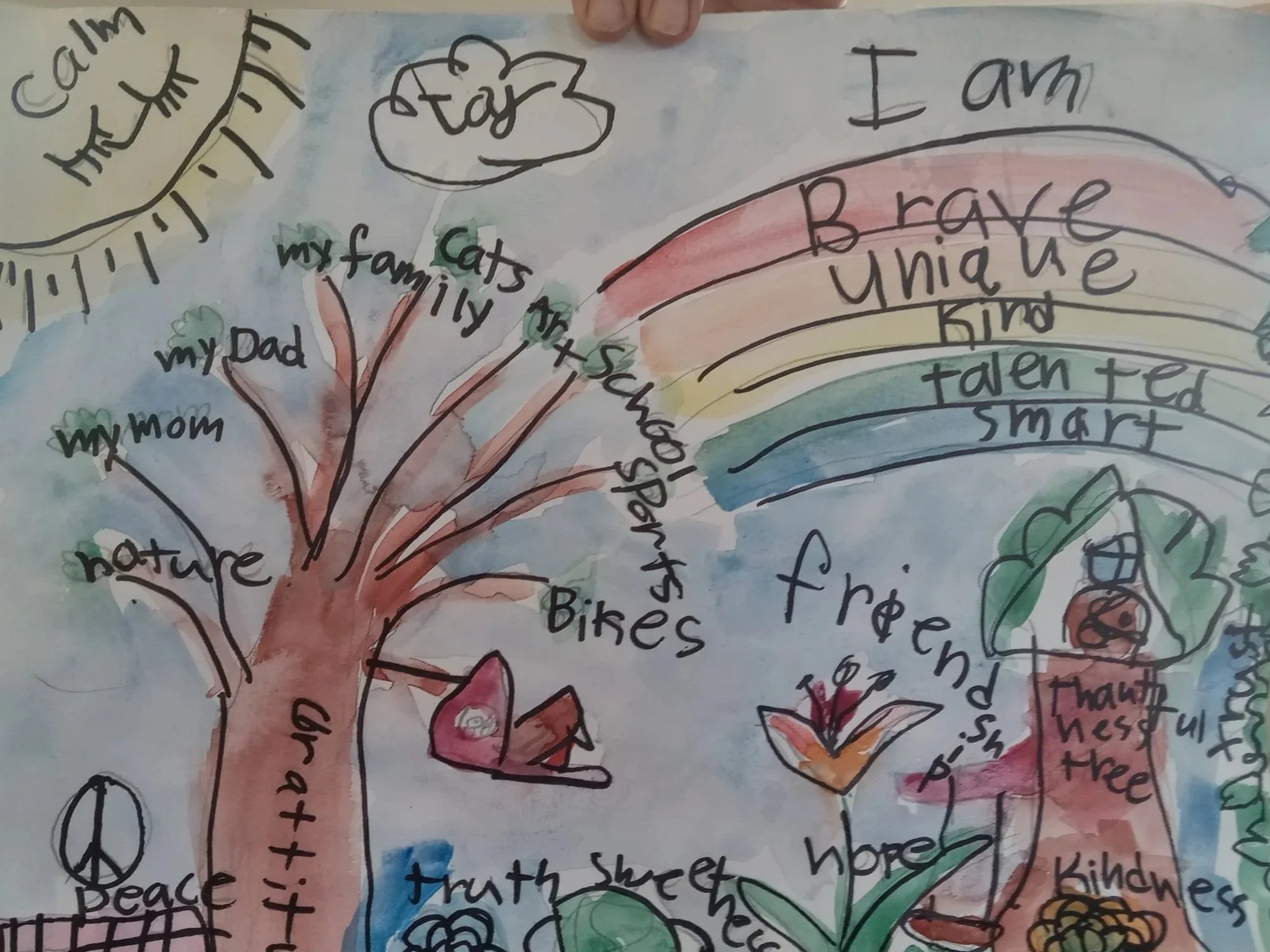
“Art is the language of the soul, and through it, we find healing and self-discovery.”
In recent years, the Medford School District has faced difficult budget decisions and has had to cut many programs, especially their K-5 art programs. Meanwhile, our community has recognized that social emotional learning (SEL) is essential for student success in our changing and challenging times. But here's what's being overlooked: art education IS social-emotional learning in action. Every time a child picks up a paintbrush, they're practicing self-awareness. Every collaborative art project builds relationship skills. Every creative problem they solve teaches responsible decision-making. When schools can't provide these opportunities due to budget constraints, that's exactly where Sticks and Stones steps in—not just to teach art, but to provide the mental health support and SEL skills that every child deserves."
What is Social Emotional Learning?
Social and emotional learning is the process through which all young people and adults acquire and apply the knowledge, skills, and attitudes to develop healthy identities, manage emotions, and work toward goals CASEL. The five core competencies are:
Self-awareness
Self-management
Social awareness
Relationship skills
Responsible decision-making
Research demonstrates that social emotional learning in schools leads to positive outcomes, including better academic performance, and decreases in stress and anxiety CASEL. Schools across the nation are increasingly prioritizing SEL as recent data shows children are more likely to struggle with mental health as they get older, with rates doubling between ages 5-9 and 10-14 Colorado Health Institute.

Art IS Social Emotional Learning

The arts provide students with a medium to express their emotions and thoughts, helping them develop sense of self-awareness and self-esteem, while engaging in arts helps students learn to regulate their emotions, behavior, and attention KID smART
Throughout the creative process, students learn to express their emotions, communicate effectively, and problem-solve Kennedy Center
Art Education Addresses All Five SEL Competencies
Art teachers help students learn artistic behaviors that develop skills to help them in school and in life, such as ability to visualize end goals, stay on task, think creatively, come up with solutions, try different methods and approaches, be patient with themselves, and identify strengths and challenges Adelphi University
When Schools Cut Arts, They're Cutting Mental Health Support
With Medford eliminating teacher librarians and reducing staff, students lose critical opportunities for creative expression and emotional processing
Art teaches kids problem-solving and decision-making skills, and creativity promotes identity development, helping students find their place in the world KQED
Art as a Non-Verbal Outlet
It may be easier for kids and teens to draw or paint what they feel instead of figuring out how to put it into words, making art a valuable mental health tool and foundational part of emotional development Sparketh
This is especially important for students with disabilities or those who struggle with verbal communication
Why Art is Essential to Mental Health
1. Art as Self-Discovery
Art gives kids a safe space to explore who they are without judgment—there's no "wrong" way to create
Through making art, students discover their preferences, strengths, and unique perspectives
Creating art helps young people figure out what they care about and what makes them who they are.
2. Finding Your Voice in a Noisy World
In a world where kids are constantly told what to think and how to act, art lets them say "this is what I think and feel"
Art provides a universal language that doesn't require perfect words, especially important for students who struggle to verbalize their emotions
When students create something, they're saying "I was here, I matter, and this is my story"
3. Building Confidence and Self-Acceptance
Every completed artwork is proof that "I can do hard things"
The creative process teaches kids that mistakes can become something beautiful—a powerful metaphor for life
Seeing their own progress over time shows students they're capable of growth and change
4. Managing Anxiety and Emotional Challenges
The repetitive motions in art (painting strokes, sculpting, drawing) can be incredibly calming and meditative
Art gives kids control in a world where they often feel powerless
Creating art provides a healthy outlet for processing difficult emotions instead of keeping them bottled up
5. Leveling the Playing Field
For students with cognitive or physical disabilities, art offers success in ways traditional academics might not
Art programs create inclusive spaces where every contribution is valued
Creative expression doesn't require you to be the fastest, the strongest, or the "smartest,” just yourself


“Art is our one true global language. It knows no nation, it favors no race, and it acknowledges no class. It speaks to our need to reveal, heal, and transform. It transcends our ordinary lives and lets us imagine what is possible.”
— Richard Kamler